A Comprehensive Study Article
Introduction
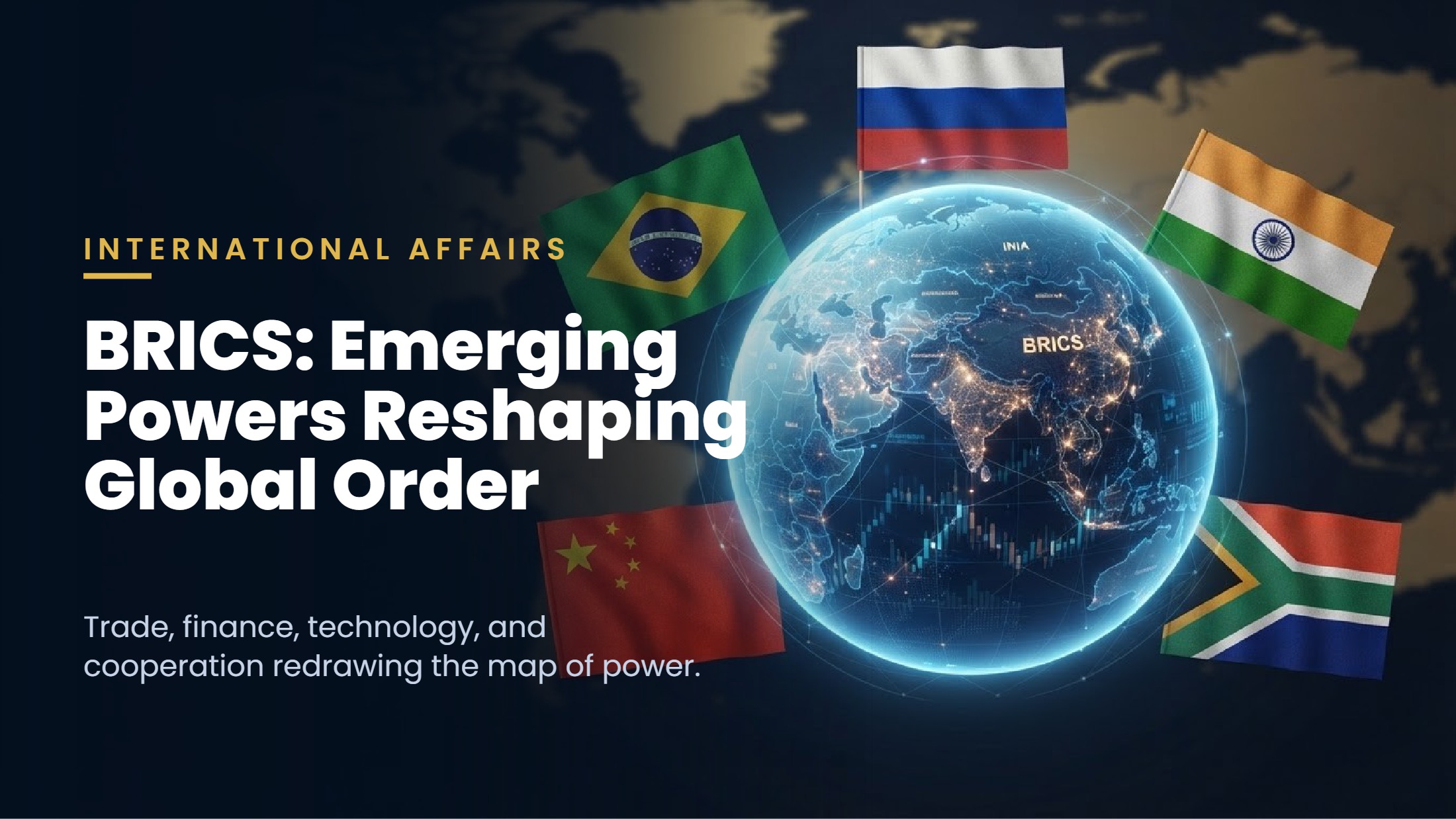
BRICS represents one of the most significant geopolitical developments of the 21st century. Comprising Brazil, Russia, India, China, and South Africa, this coalition of emerging economies has fundamentally challenged the Western-dominated international order. As of 2025-2026, BRICS continues to expand its influence and reshape global affairs through economic cooperation, political coordination, and institutional innovation.
What is BRICS?
Historical Context
BRICS began as an informal economic grouping:
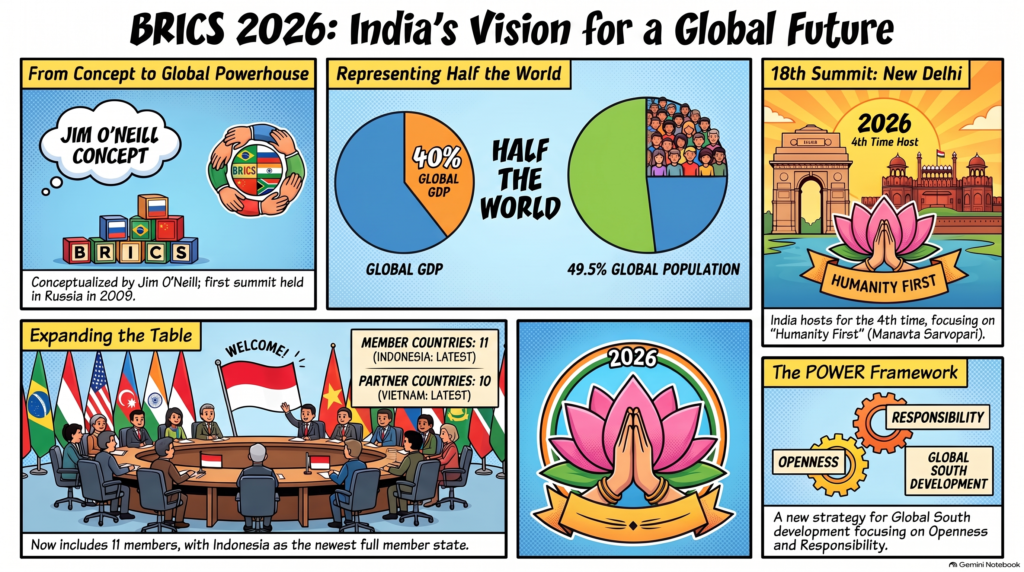
- 2001: Term “BRIC” coined by Jim O’Neill (Goldman Sachs economist)
- 2009: First official BRICS summit held in Yekaterinburg, Russia
- 2010: South Africa joined, making it BRICS
- 2011-2014: Establishment of New Development Bank (NDB)
- 2015-Present: Institutional consolidation and expansion
Member States Overview
| Country | Population | GDP (nominal) | Key Role |
| China | 1.4 billion | Largest in BRICS | Tech & Manufacturing |
| India | 1.4 billion | Fastest growing | IT & Services |
| Brazil | 215 million | Largest in Americas | Resources & Agriculture |
| Russia | 144 million | Energy provider | Oil & Gas |
| South Africa | 59 million | Gateway to Africa | Political bridge |
Recent BRICS Expansion (2023-2024)
New Members
One of the most significant recent developments is BRICS expansion:
2023 Expansion:
- Saudi Arabia – Petrodollar challenger
- Iran – OPEC member, sanctions-hit
- UAE – Regional financial hub
- Egypt – African gateway
- Ethiopia – African stability
2024-2025 Status:
- Argentina – Withdrew (2024) after political transition
- Multiple applicants – Mexico, Turkey, Indonesia, and others seeking membership
This expansion reflects BRICS ambitions to become a truly multipolar forum beyond just emerging markets.
Key Institutions & Initiatives
1. New Development Bank (NDB)
Established: 2014 Purpose: Alternative to World Bank and IMF
Recent Developments:
- Expanded lending operations
- De-dollarization initiatives
- Infrastructure financing for member states
- Local currency settlement mechanisms
2. Contingent Reserve Arrangement (CRA)
Fund Size: $100 billion (as of 2024) Purpose: Mutual financial support during crises Recent Updates: Expanding capacity and reducing dollar dependency
3. BRICS Currency Project
Status: Active discussions (2024-2025) Goal: Reduce dependence on US dollar Initiatives:
- Local currency trading between members
- Digital currency exploration
- Alternative payment systems development
Current Affairs: Major Topics (2025-2026)
1. De-Dollarization Movement
Context: BRICS nations increasingly discuss reducing USD dominance
Actions Taken:
- Bilateral trade agreements in local currencies
- Cross-border payment systems bypass SWIFT
- Central bank digital currency (CBDC) development
- Gold reserve accumulation
Challenges:
- USD remains globally dominant
- Implementation complexity
- Coordination difficulties among diverse members
2. Geopolitical Tensions
Russia-Ukraine Conflict Impact:
- Division within BRICS on Ukraine stance
- India and Brazil maintaining neutrality
- South Africa’s diplomatic balancing act
China-India Border Issues:
- Ongoing territorial disputes
- Affect institutional cooperation
- Strain on BRICS cohesion
Middle East Developments:
- Iran’s controversial role
- Implications for regional stability
- Energy price impacts
3. Global South Leadership
BRICS Positioning:
- Advocate for Global South interests
- Counterbalance Western-led institutions
- Reform of UN Security Council (India seeks permanent seat)
- Climate finance negotiations
4. Economic Cooperation
Trade Volume:
- Total BRICS trade reaching $300+ billion annually
- Intra-BRICS investment increasing
- Infrastructure projects across continents
Belt and Road Integration:
- Many BRICS members part of China’s BRI
- Infrastructure development initiatives
- Economic interdependence
5. Digital Economy & Technology
Emerging Areas:
- Digital currency development
- Cybersecurity cooperation
- AI and tech standards setting
- Digital payment systems
Challenges Facing BRICS
1. Internal Contradictions
- Diverse Interests: Members have conflicting foreign policies
- Power Imbalances: China’s dominance creates tensions
- Development Gap: Vastly different economic levels
2. Institutional Weaknesses
- Limited enforcement mechanisms
- Consensus-based decision making (slow)
- Weak dispute resolution
- Brain drain to developed countries
3. External Pressures
- Western sanctions (especially on Russia)
- US strategic competition
- Economic interdependence on Western markets
- Technology export controls
4. Coordination Challenges
- Language and cultural differences
- Geographic dispersion
- Competing regional interests
- Domestic political variations
BRICS’ Strategic Impact on Global Affairs
1. Multipolarity
BRICS embodies a shift toward multipolar world:
- Challenges US-led unipolar order
- Creates alternative power centers
- Influences UN voting patterns
- Shapes international negotiations
2. Development Agenda
Focus Areas:
- Infrastructure development in emerging markets
- Technology transfer
- Capacity building
- Sustainable development financing
3. Climate & Sustainability
Positions:
- Push for differentiated climate responsibilities
- Common but different development needs
- Renewable energy cooperation
- Green finance initiatives
4. Security & Cooperation
- Counter-terrorism collaboration
- Military exercises (SCO framework)
- Cybersecurity standards
- Space technology cooperation
Future Outlook (2025-2027)
Probable Developments
- Further Expansion: More Global South countries likely to join
- Currency Innovation: Progress on alternatives to USD
- Enhanced Institutions: Strengthening of NDB and CRA
- Tech Integration: Deeper digital cooperation
- African Participation: More African countries joining
- Regional Sub-Groups: Trade blocs within BRICS
Critical Questions
- Will internal contradictions undermine BRICS?
- Can BRICS truly challenge Western hegemony?
- What is the realistic scope of de-dollarization?
- How will geopolitical tensions (India-China, Russia sanctions) affect unity?
- Will BRICS remain exclusive or become too large?
Conclusion
BRICS represents a significant realignment in international relations. While facing substantial challenges, it demonstrates the emerging economies’ determination to create alternative institutions and challenge Western-dominated structures. As of 2025-2026, BRICS is evolving from a growth-focused economic forum into a comprehensive geopolitical bloc addressing security, development, and currency issues.
For students and researchers, BRICS serves as a crucial case study in:
- International Relations: Multipolarity and power shifts
- International Political Economy: Alternative financial systems
- Regional Studies: Emerging market cooperation
- Geopolitics: Global South assertiveness
The organization’s trajectory will significantly influence the structure of 21st-century international affairs, making it essential for contemporary study.
Recommended Further Reading
- Stuenkel, Oliver. “Post-Western World”
- Sharma, Ravi. “BRICS and Beyond”
- Council on Foreign Relations publications on BRICS
- Academic journals: International Affairs, China Quarterly
Information current as of September 2026.
No responses yet