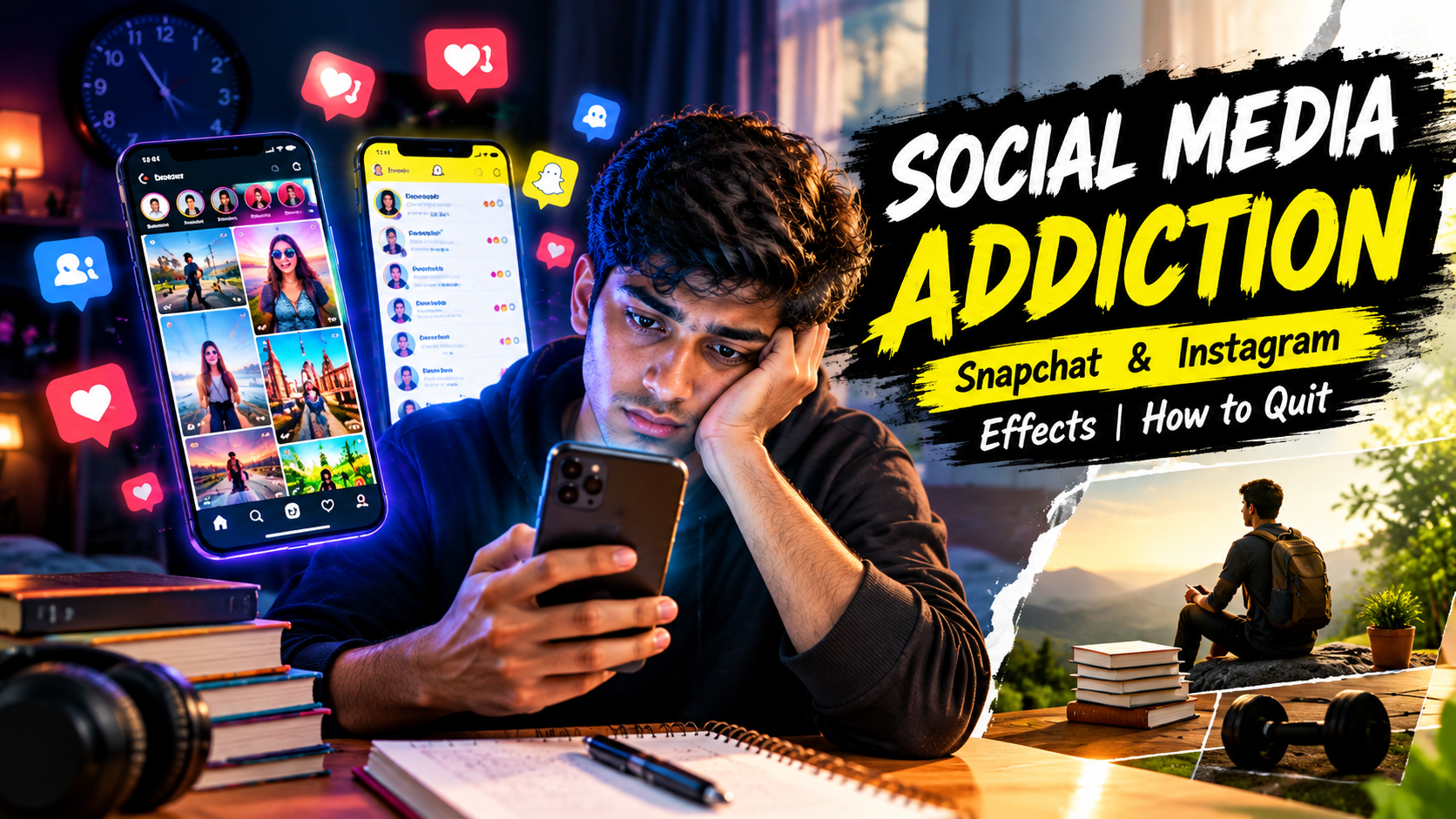
Instagram and Snapchat have become a major part of everyday communication and entertainment. People use them to chat with friends, watch short videos, share photos, follow creators and stay updated with trends.
Social media itself is not necessarily harmful. The problem can arise when checking apps becomes difficult to control and starts interfering with sleep, studies, work, relationships or everyday activities. In this article, we will look at the effects of excessive Instagram and Snapchat use and discuss simple ways to develop healthier social-media habits
What Is Social Media Addiction?
Social media addiction generally refers to a pattern of excessive or difficult-to-control social-media use despite negative effects on everyday life.
Some common warning signs include:
- Checking Instagram or Snapchat repeatedly without a specific reason
- Spending much longer on the apps than planned
- Feeling uncomfortable when unable to check notifications
- Using social media instead of studying or completing important tasks
- Checking the phone immediately after waking up
- Using social media late at night
- Losing track of time while watching short videos or stories
- Becoming distracted during conversations or work
Having one of these habits does not automatically mean someone has an addiction. The important issue is whether social-media use is becoming difficult to control and causing problems in daily life.
Effects of Excessive Instagram and Snapchat Use
1. Reduced Concentration
Constant notifications, short videos and rapidly changing content can encourage frequent attention switching. For students and people doing focused work, repeatedly checking social media can make it harder to maintain uninterrupted concentration.
2. Sleep Problems
Using a smartphone late at night can delay bedtime and make it harder to maintain a healthy sleep routine. Social-media content can also encourage people to keep scrolling instead of going to sleep.
A simple rule can help: avoid social media during the final part of your bedtime routine.
3. Stress and Comparison
Instagram in particular often presents carefully selected images of people’s lives. Constantly comparing your everyday life with other people’s online posts can contribute to dissatisfaction or negative feelings.
Remember that social-media posts usually show selected moments rather than someone’s complete life.
4. Less Time for Real-Life Activities
Hours spent scrolling can gradually replace activities such as:
- Exercise
- Reading
- Studying
- Family time
- Outdoor activities
- Hobbies
- Face-to-face conversations
The issue is not simply the number of minutes spent online. It is also what those minutes replace.
5. Constant Need for Notifications
Likes, messages, snaps and new content can encourage people to check their phones repeatedly.
Turning off non-essential notifications can reduce these interruptions.
6. Reduced Productivity
A quick social-media check can easily turn into a much longer session. This can interrupt studying, work and other important activities.
Using social media only during predetermined breaks can make it easier to protect focused work time.
How to Quit or Reduce Instagram and Snapchat Use
You do not necessarily have to delete every social-media account. For many people, the more realistic goal is to regain control over when and why they use these apps.
Step 1: Check Your Screen Time
First, find out how much time you actually spend on Instagram and Snapchat.
Do not guess. Check your phone’s screen-time or digital-wellbeing settings.
Once you know your current usage, you have a starting point for reducing it.
Step 2: Turn Off Unnecessary Notifications
Disable notifications that are not important.
Keeping fewer alerts can reduce the temptation to pick up your phone every few minutes.
Step 3: Remove the Apps From Your Home Screen
You don’t always need to delete the apps.
Moving them away from your main home screen creates a small barrier between you and automatic checking.
Step 4: Set Specific Social-Media Times
Instead of opening Instagram or Snapchat whenever you feel bored, choose specific times during the day.
For example:
Morning: No social media immediately after waking up
Afternoon: Short social-media break
Evening: Limited entertainment time
Before bed: No social-media scrolling
The exact schedule can be adjusted to your routine.
Step 5: Keep Your Phone Away While Studying or Working
Put your phone in another room, inside a bag or somewhere outside your immediate reach.
Reducing access can make it easier to stay focused.
Step 6: Replace Scrolling With Another Activity
Simply saying “I won’t use Instagram” may not be enough.
Replace the habit with something useful:
- Walking
- Exercise
- Reading
- Learning a skill
- Listening to music
- Meeting friends
- Writing
- Studying
- Spending time outdoors
The goal is not just to remove screen time but to replace it with meaningful activities.
Step 7: Try a Short Social-Media Break
Try a one-day or weekend break from Instagram and Snapchat.
Notice what happens to your concentration, mood, sleep routine and free time.
If a complete break feels unrealistic, start by reducing your daily usage gradually.
A Simple 7-Day Social Media Reset
Day 1: Check your current screen time
Day 2: Turn off unnecessary notifications
Day 3: Remove social apps from your home screen
Day 4: Avoid social media while studying or working
Day 5: Stop using social media during meals
Day 6: Keep your phone away before bedtime
Day 7: Review your screen time and decide what limits work for you
The Goal Is Control, Not Perfection
Instagram and Snapchat can be useful for communication, entertainment and staying connected with people.
The goal does not have to be completely abandoning social media.
A healthier approach is to make a conscious decision about when, why and how long you use it.
If social-media use is seriously interfering with sleep, school, work, relationships or your ability to function normally, consider talking with a qualified mental-health professional for personalized help.
Final Thoughts
Social media can be a useful part of modern life, but excessive and uncontrolled use can take time away from sleep, concentration, relationships and real-world activities.
Start with small changes. Check your screen time, reduce unnecessary notifications, create phone-free periods and replace scrolling with activities that matter to you.
The aim is simple: use social media as a tool instead of allowing it to control your routine.
No responses yet