Fraud is one of the most damaging cybersecurity threats individuals and businesses face today. Whether it’s identity theft, phishing scams, or financial fraud, the consequences can be devastating. This guide provides practical strategies to protect yourself from common fraud schemes.
Understanding Fraud
Fraud occurs when someone intentionally deceives you to gain unauthorized access to your personal information, money, or resources. In the digital age, fraudsters are sophisticated, using multiple tactics to exploit vulnerabilities. The average fraud victim loses thousands of dollars and countless hours recovering their identity.
Common Types of Fraud
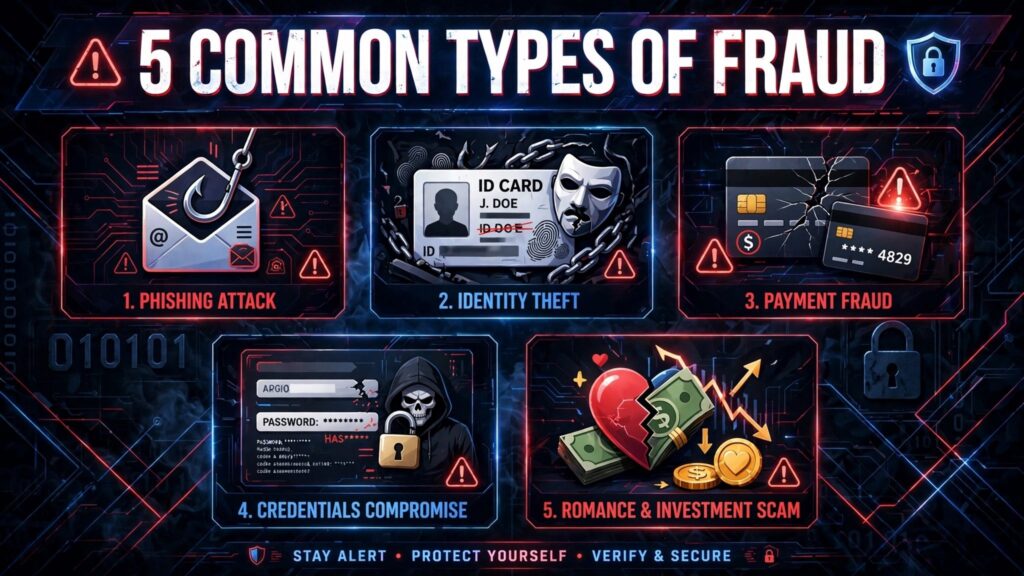
Phishing Attacks
Fraudsters send deceptive emails, texts, or calls impersonating trusted organizations. They create urgent scenarios (“Verify your account now!” or “Confirm payment”) to pressure you into clicking malicious links or revealing sensitive information.
Identity Theft
Criminals steal personal information (Social Security numbers, dates of birth, financial details) to open fraudulent accounts, make unauthorized purchases, or commit crimes in your name.
Payment Fraud
This includes credit card fraud, banking scams, and payment app exploitation. Attackers intercept transactions or trick you into sending money directly to fraudulent accounts.
Credential Compromise
Hackers obtain usernames and passwords through data breaches, then use them to access your accounts across multiple platforms (credential stuffing).
Romance and Investment Scams
Fraudsters build trust over time through fake relationships or investment opportunities, eventually convincing victims to send money for emergencies or “guaranteed” returns.
Essential Protection Strategies
1. Use Strong, Unique Passwords
- Create passwords with 12+ characters including uppercase, lowercase, numbers, and symbols
- Never reuse passwords across different accounts
- Use a password manager (Bitwarden, 1Password, LastPass) to generate and store complex passwords securely
2. Enable Multi-Factor Authentication (MFA)
- MFA adds a second verification step beyond your password
- Use authenticator apps (Google Authenticator, Microsoft Authenticator) rather than SMS when possible—SMS can be intercepted
- Apply MFA to email, banking, social media, and critical accounts first
3. Verify Before You Click or Share
- Hover over links to see the actual URL before clicking
- Look for suspicious sender addresses (slight misspellings like “amazom.com”)
- Never click links or download attachments from unexpected sources
- Contact organizations directly using verified phone numbers or websites
4. Protect Your Personal Information
- Shred sensitive documents
- Don’t share Social Security numbers, financial details, or passwords unless absolutely necessary
- Be cautious about what you share on social media—fraudsters use public information to build fake profiles
- Opt out of data sharing with credit bureaus when possible
5. Monitor Your Accounts Regularly
- Check bank and credit card statements weekly for unauthorized transactions
- Use free credit monitoring services (AnnualCreditReport.com)
- Place fraud alerts or credit freezes with the three major credit bureaus (Equifax, Experian, TransUnion)
- Monitor your credit report for accounts you didn’t open
6. Secure Your Devices
- Keep operating systems, browsers, and apps updated with security patches
- Use reputable antivirus and anti-malware software
- Enable firewalls on all devices
- Use secure Wi-Fi networks; avoid public Wi-Fi for sensitive transactions
- Lock your devices with strong PINs or biometric authentication
7. Email and Communication Security
- Don’t trust sender names alone; verify email addresses
- Be skeptical of unsolicited requests for information
- Use encrypted email for sensitive communications
- Enable email authentication protocols (SPF, DKIM, DMARC) if you own a domain
8. Financial Precautions
- Use virtual card numbers for online shopping
- Avoid wire transfers unless you’re certain of the recipient
- Set up transaction alerts with your bank
- Consider separate accounts for online shopping vs. savings
- Never share banking credentials, even with tech support
9. Social Engineering Defense
- Fraudsters manipulate people through authority, urgency, or trust
- Always verify requests through independent channels
- Ask questions: legitimate organizations won’t pressure you immediately
- Be suspicious of “limited time” offers or emergencies
10. Educate Yourself Continuously
- Stay informed about new fraud tactics
- Learn to recognize social engineering techniques
- Teach family members about common scams
- Read security advisories from trusted sources (CISA, FBI IC3)
What to Do If You’re Targeted
If you suspect fraud:
- Change compromised passwords immediately
- Contact your bank and credit card companies
- Place a fraud alert with credit bureaus
- File a report with the Federal Trade Commission (ReportFraud.ftc.gov)
- Consider freezing your credit
- Document everything and keep records
- Monitor accounts closely for 12+ months
Key Takeaways
- Vigilance is your best defense: Stay skeptical and think before clicking or sharing
- Layered security works: Use multiple protection methods together
- Speed matters: Act quickly if you suspect fraud
- Prevention is easier than recovery: Invest time in security now to avoid devastating consequences later
Fraud prevention requires ongoing attention, but the investment pays off. By implementing these strategies and staying informed, you can significantly reduce your risk and protect your identity, finances, and peace of mind.
No responses yet