This study guide provides a comprehensive overview of the Unified Payments Interface (UPI) regulatory framework as of September 2026. It explores the distinctions between various transaction types, the application of the Merchant Discount Rate (MDR), and the protections established for consumers and small businesses.
1. What is the primary function of UPI and what are some common examples of its use?
UPI, or Unified Payments Interface, is a digital system that allows users to transfer money directly from their bank accounts using various mobile applications. It is used for a wide range of activities including sending money to family, paying shopkeepers, settling utility bills, and shopping online.
2. How does the 2026 regulatory framework treat Person-to-Person (P2P) transactions?
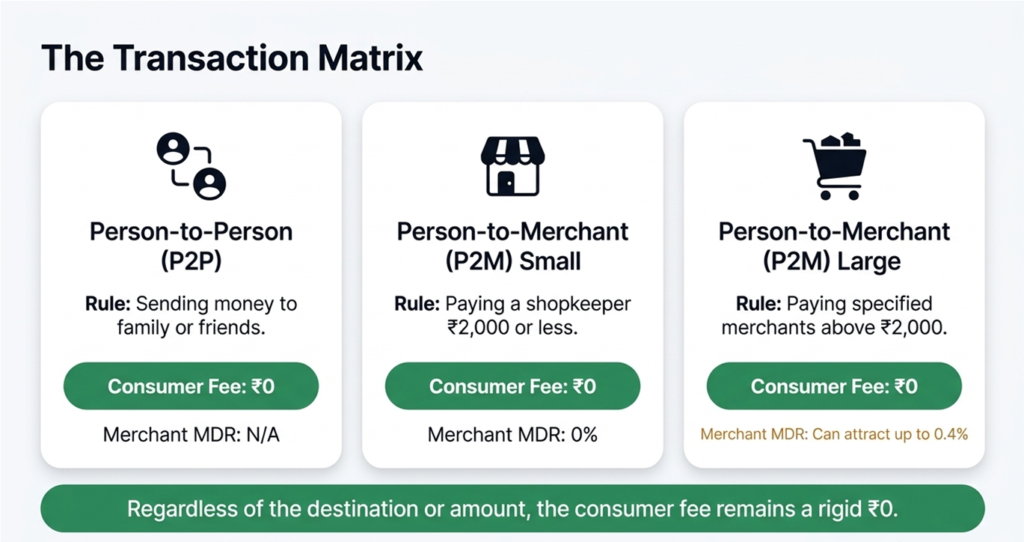
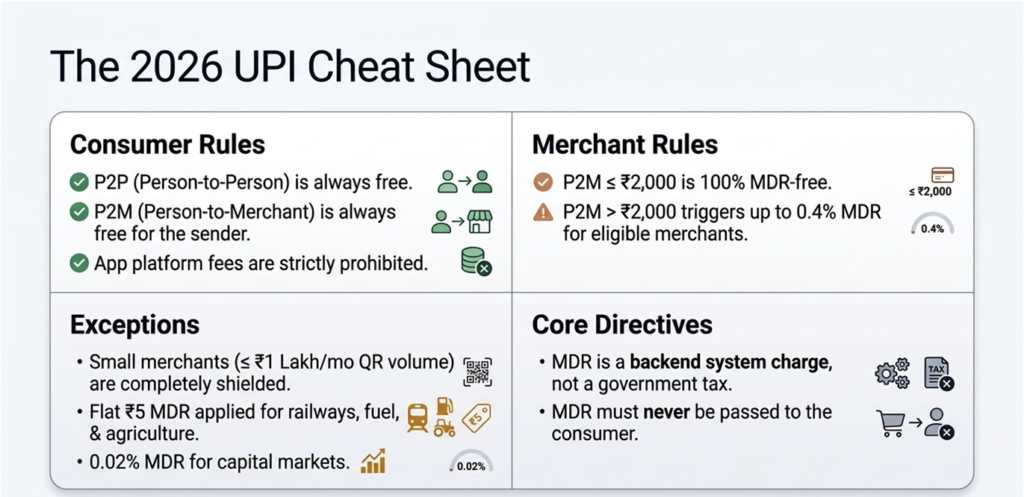
Person-to-Person (P2P) transactions remain entirely free for all users regardless of the amount being sent. The new MDR framework is specifically designed for merchant transactions and does not apply to transfers between individuals, such as sending money to a friend or relative.
3. What is the threshold for Merchant Discount Rate (MDR) application in standard merchant payments?
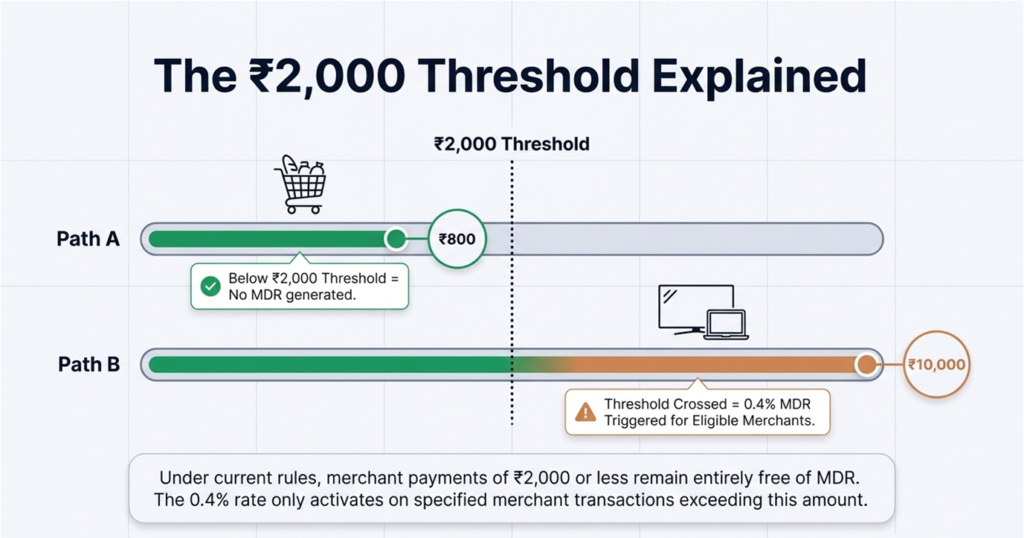
For standard Person-to-Merchant (P2M) transactions, payments of ₹2,000 or less are free of MDR. The 0.4% MDR only applies to specified merchant transactions that exceed the ₹2,000 limit.
4. How is the Merchant Discount Rate (MDR) defined within the payment ecosystem?
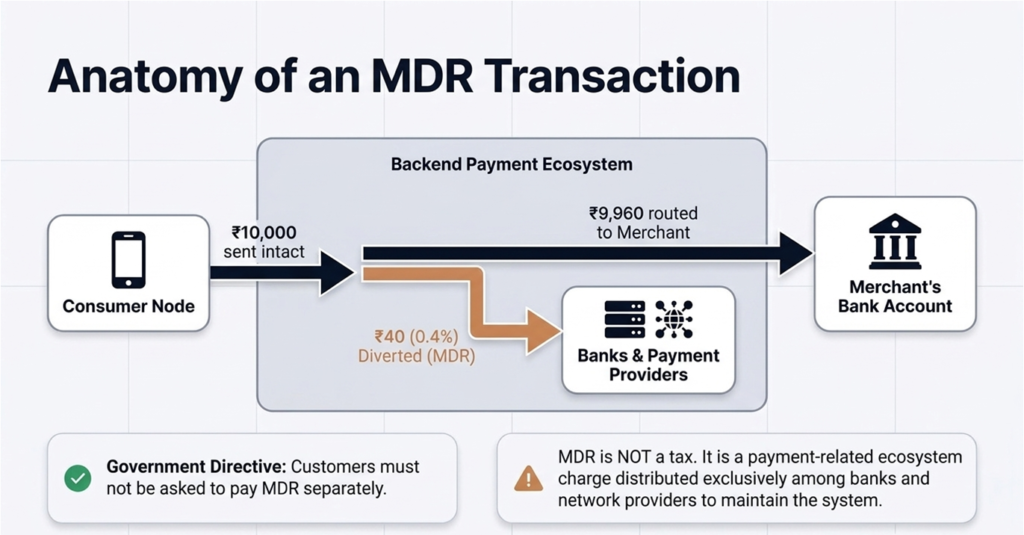
MDR is not a tax, but a payment-related charge that is distributed among various participants in the system, including banks and payment-service providers. It is a framework handled internally by the payment ecosystem to maintain the digital transaction infrastructure.
6. What specific protections are in place for small-scale merchants regarding UPI charges?
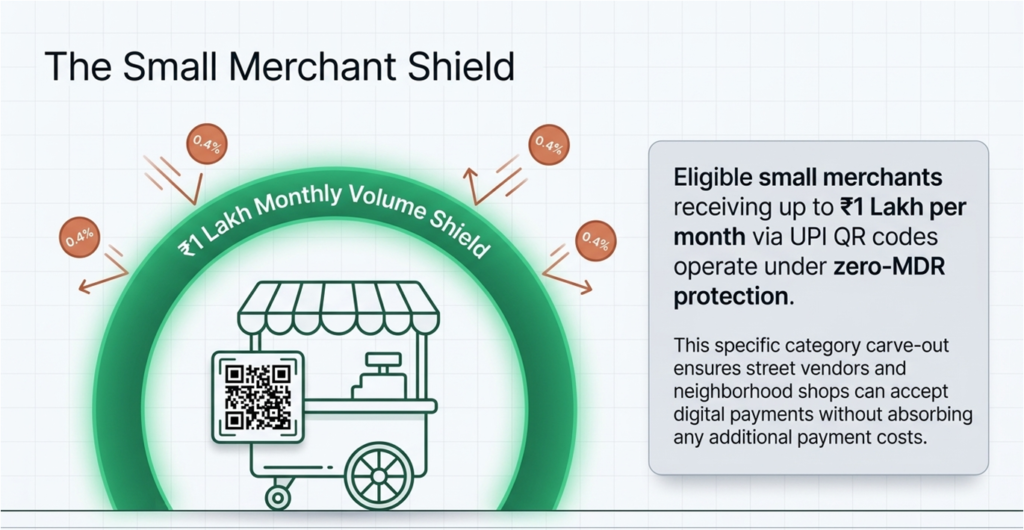
10. What is the difference between a “UPI limit” and a “UPI charge
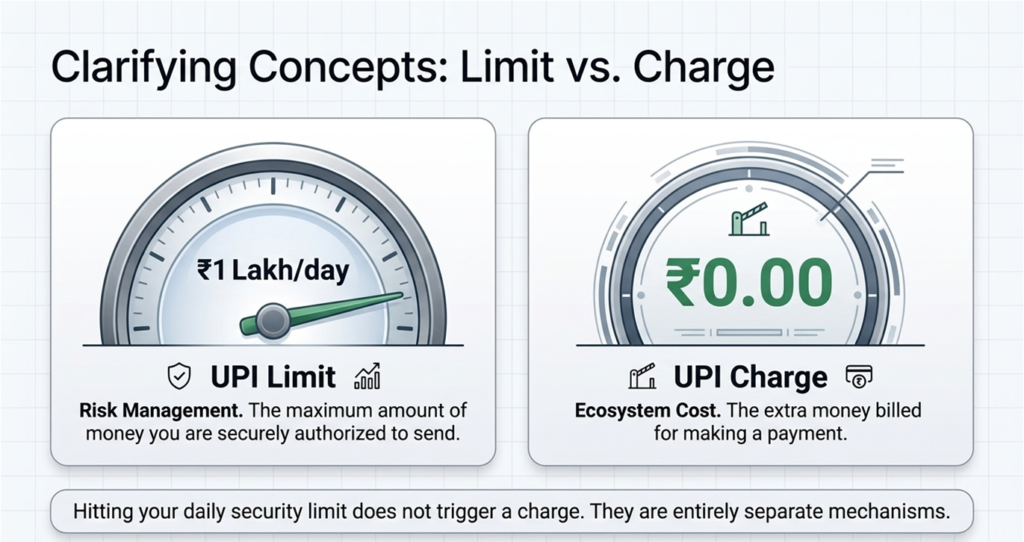
A UPI limit is a security and risk-management measure that defines the maximum amount of money a user can send daily. A UPI charge is an actual fee for the transaction; the government emphasizes that reaching a transaction limit does not trigger a financial charge.
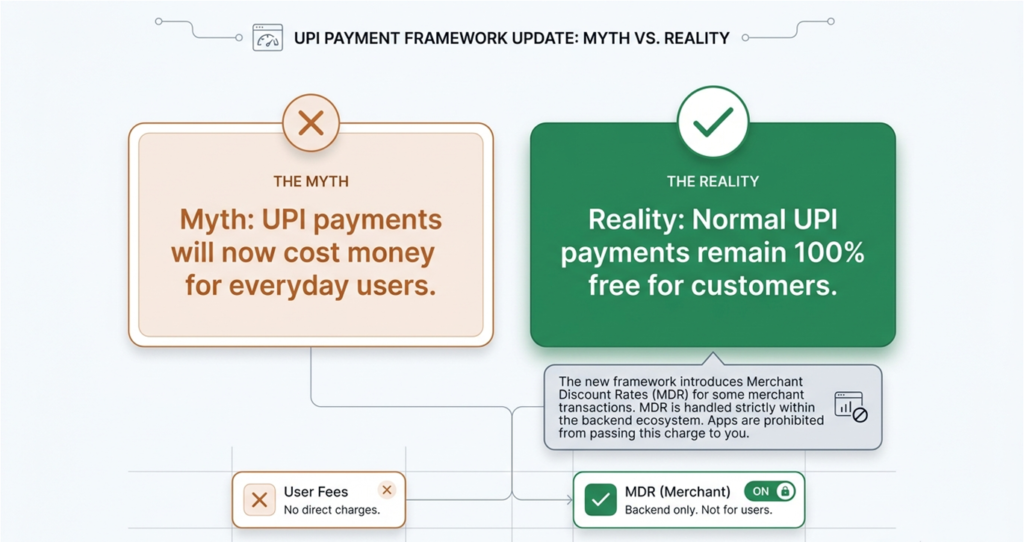
The Simple Conclusion: If you use UPI to send money to family, friends, or make everyday payments, you will not pay a transaction fee.
No responses yet